
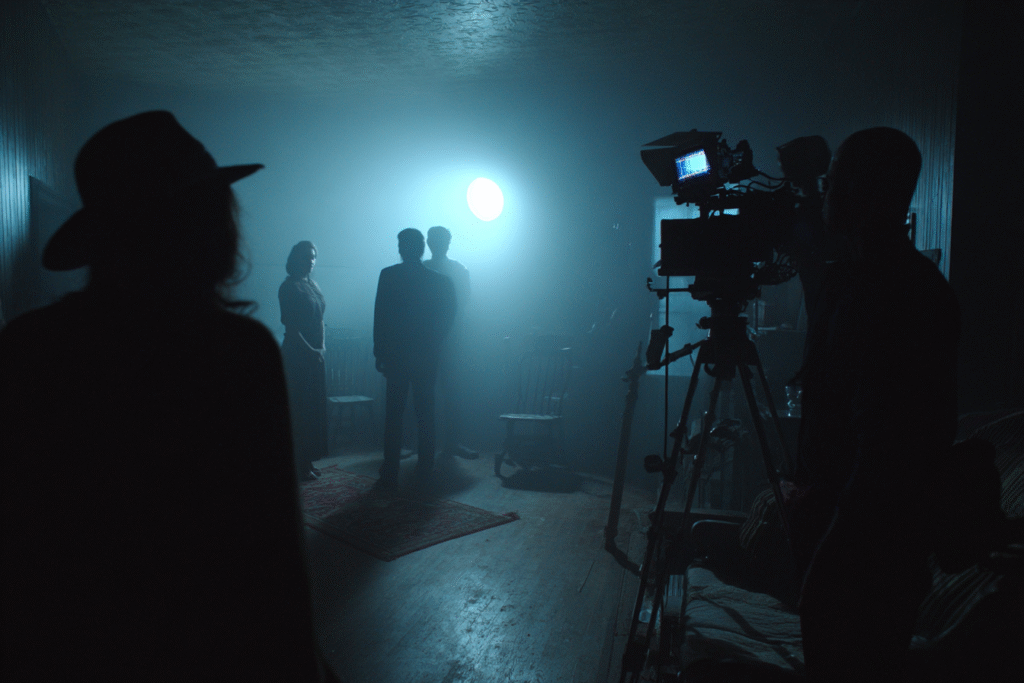
Types Of Light
Not all types of film lighting are created equally. Light comes in a wide variety of forms, packages and sources. So before you start flipping switches on set, it’s important to know all the options you can work with.
All types of film lighting fall under one of two categories: natural and artificial. Natural light is — you guessed it — light which occurs naturally. This can be illumination coming from the sun, moon, fire, or firefly.
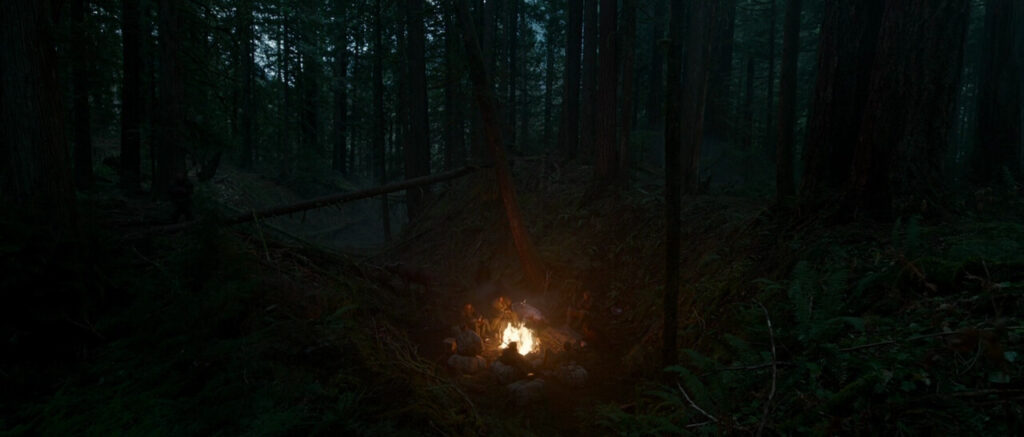
Artificial light, on the other hand, is man-made. Streetlights, neon lights, flashlights, LED panels — these are all artificial. The lights that a film crew lugs onto set and boots up several generators to power? Those are artificial too.
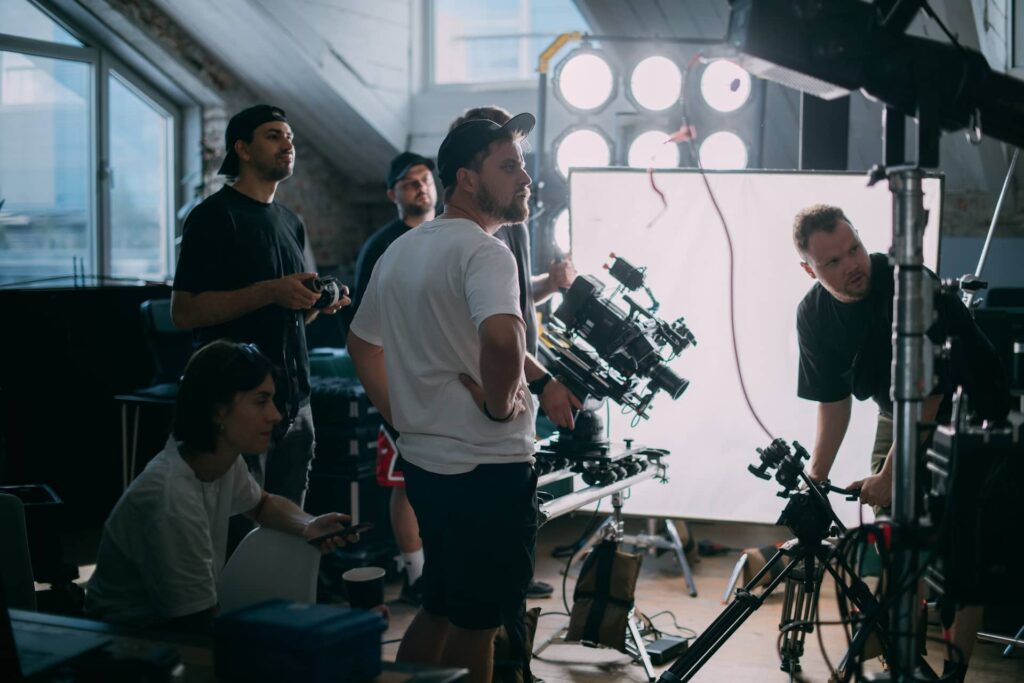
But artificial and natural aren’t the only categories which lights can be divided into. For example, there’s also ambient light, which refers to any light on set which the crew didn’t bring.
Ambient light can be either artificial or natural. If you’re shooting in a bar, ambient light may be coming from a buzzing “open” sign. If you’re shooting on the side of the road, passing cars’ headlights would be ambient. Of course, if you’re shooting outside during the day, you’re going to have to deal with the most powerful ambient light of all: the sun.
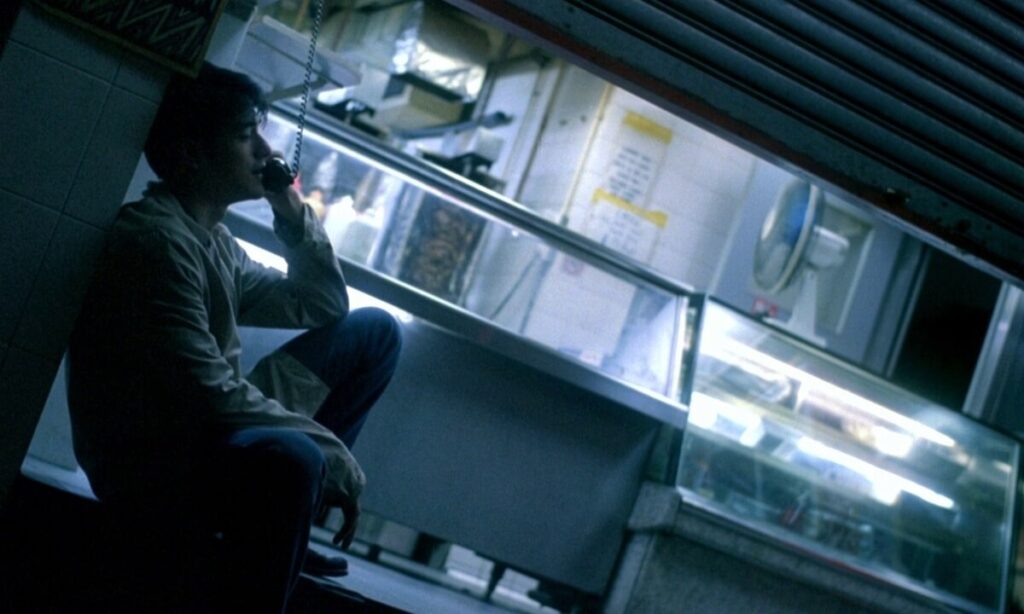
Ambient lights can also occasionally fall into another category if they’re used as they are in the above image. Any light source that appears in the frame of a shot is referred to as practical lighting.
But practical lighting in movies doesn’t have to be ambient– it could also be placed in the shot by a gaffer.
A gaffer is the head lighting electrician on set. As such, she runs the entire electrical department of the crew, and helps the director of photography achieve the film lighting desired for each shot.
Practical lighting for film is often closely related to motivated lighting – yes, another category, but this one’s slightly different. Motivated lighting in film refers to a lighting approach rather than a source.
Motivated lighting is filmmaking lighting — wait for it — which has motivation. In other words, it is lighting that has a logical reason for appearing the way it does in a shot.
It’s easier to explain motivated lighting with an example. Take a look at this shot from George Miller’s Three Thousand Years Of Longing.
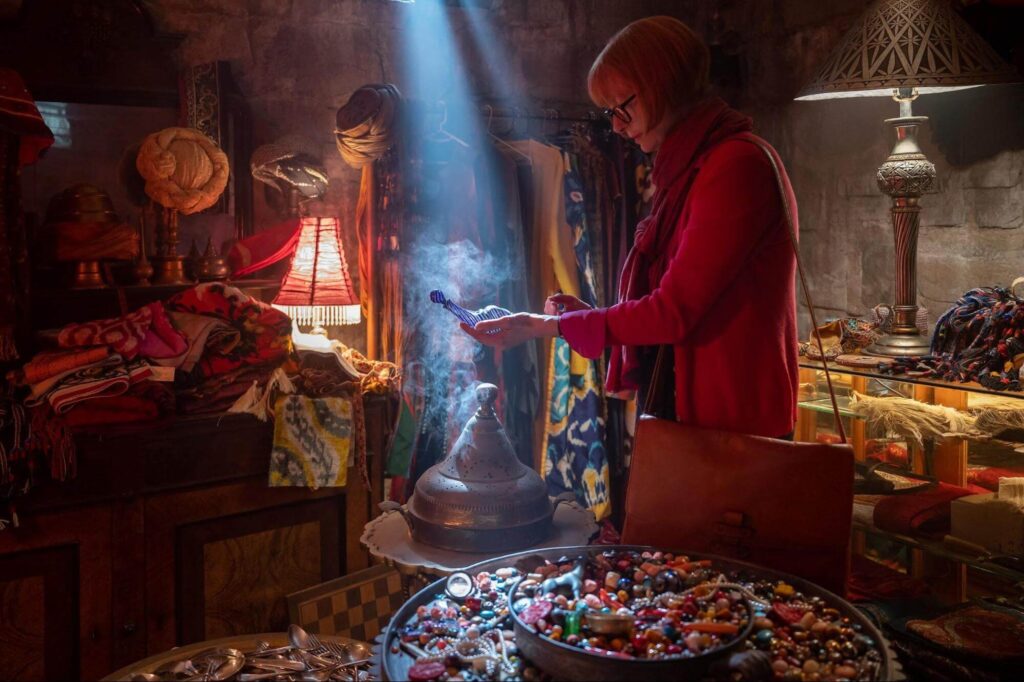
There’s a lot of lighting going on here, with a variety of sources and textures. There’s two prominently featured practical lights, the lamps which are on either side of Alithea.
The right lamp provides some edge light on her back, and the left provides a diffused red glow on her face – or so it seems. It’s likely that the red lamp, while providing motivation for a warm light on Alithea’s face, is not actually the light providing it.
That’s probably a much less aesthetically pleasing light off frame.
Then, of course, there’s the harsh blue spotlight shining down on the object of Alithea’s attention. Like the red light on her face, this light is likely created by a strong film light just off frame. But that’s not how we view the light in the scene– we can safely assume that it is coming from the sun through a window in the bizarre. So this light, too, is motivated.